
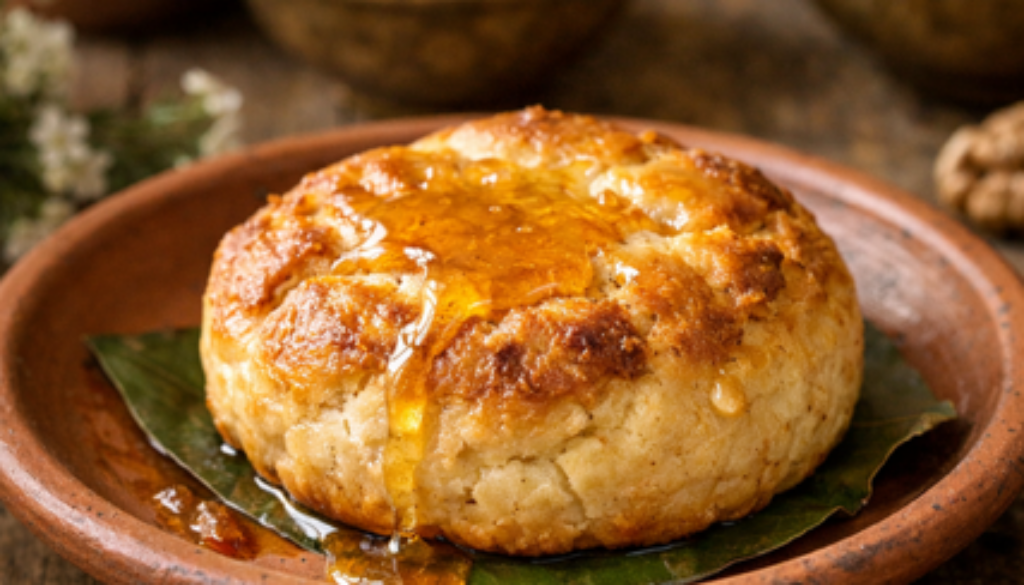
Roman Honey Cake (Libum)
The Romans often made small honey cakes called libum, offered first to the household gods and then shared. A version appears in the writings of Cato the Elder in De Agri Cultura — one of the oldest surviving Roman texts.
Below is a gently adapted version you can actually bake in your modern kitchen.
Ingredients
- 1 cup ricotta cheese (or sheep’s milk ricotta if you can find it)
- 1 cup flour (you can use whole wheat or spelt for authenticity)
- 1 egg
- 2–3 tablespoons raw honey (plus more for drizzling)
- 1 bay leaf (optional but traditional)
- Pinch sea salt
Method
- Preheat oven to 350°F.
- In a bowl, mash ricotta until smooth.
- Add egg, honey, and salt. Stir gently.
- Fold in flour until a soft dough forms.
- Shape into a small round loaf (or divide into little rounds — very charming for gatherings).
- Place on parchment. Traditionally, it would sit on a bay leaf — you may tuck one underneath for fragrance.
- Bake 30–35 minutes, until lightly golden.
- While warm, drizzle generously with more honey.
Flavor Notes
This is not a fluffy cake like we know today. It’s:
- Lightly sweet
- Tender from the ricotta
- Rustic and subtly pairs beautifully with:
- Fresh berries
- A spoon of thick Greek yogurt
- A sprinkle of crushed pistachios
- Or a warm herbal tea


March 4, 2026 @ 5:38 pm
Thank you for all the recipes.I hope to try some of them.And i’m so happy for you and your success and everything that you’re doing.You look so happy.
Love you